
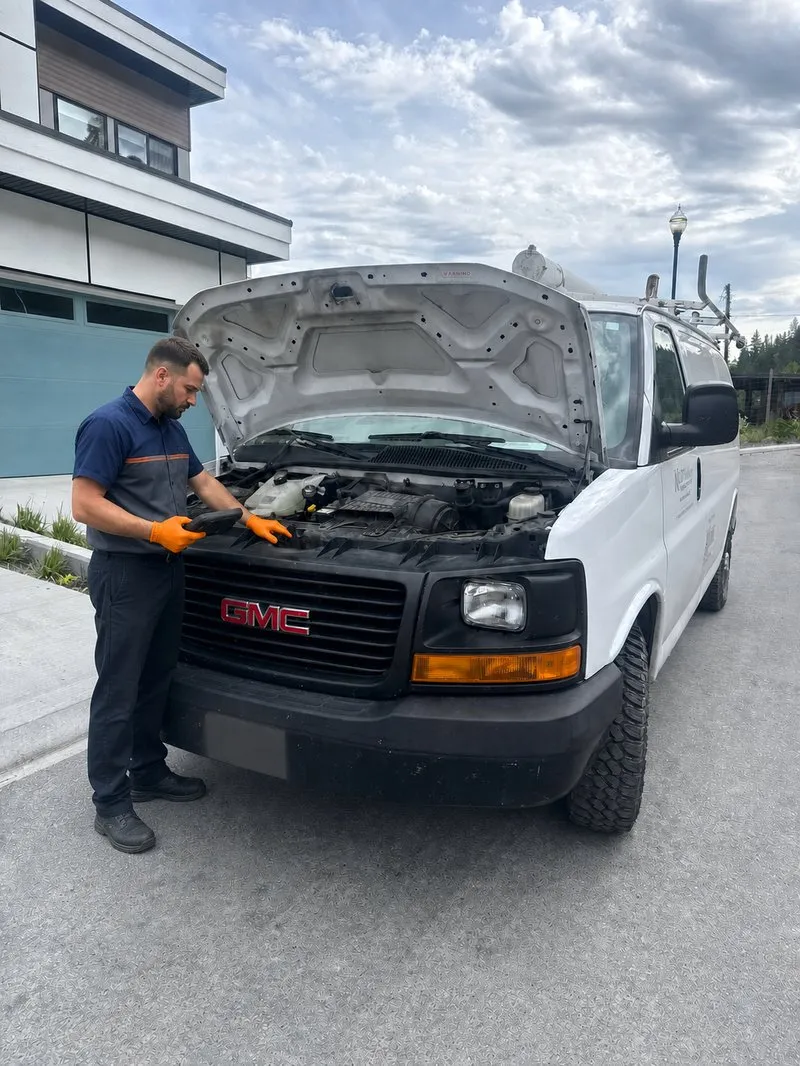
A work crew from Vancouver texted us early one morning: their 2016 GMC Savana was leaking water and they didn't know why. They were just passing through Kelowna.
We answered right away. Every case we take starts with a text, and the same certified mechanic handles it from that first message through to the finished repair. The crew explained the problem once, to the person who would end up fixing it.
We scheduled an on-site diagnostic for that same morning. The quote comes after a certified mechanic has been to the vehicle with the right equipment and found the actual problem, which is why we don't put a number on a repair we haven't seen yet.
We only found out about the two-week quotes from other shops once we were already there, running the diagnostic. The crew hadn't mentioned it in the first text. It came up while we were working on the van.
A premium service that comes to you, from first message to finished repair
- 01 Text You text us what the vehicle is doing, and we answer the same day.
- 02 Diagnose We come to you and test it while you watch.
- 03 Fix You approve the repair after seeing what failed.
How we confirmed it was the water pump
A coolant leak can come from more than one place: a hose, a clamp, a cracked reservoir, or the pump itself. Each one looks the same from underneath the van, just a puddle of coolant on the ground. Guess wrong and the crew pays for a part that was never the problem, then waits again while the real cause keeps leaking.
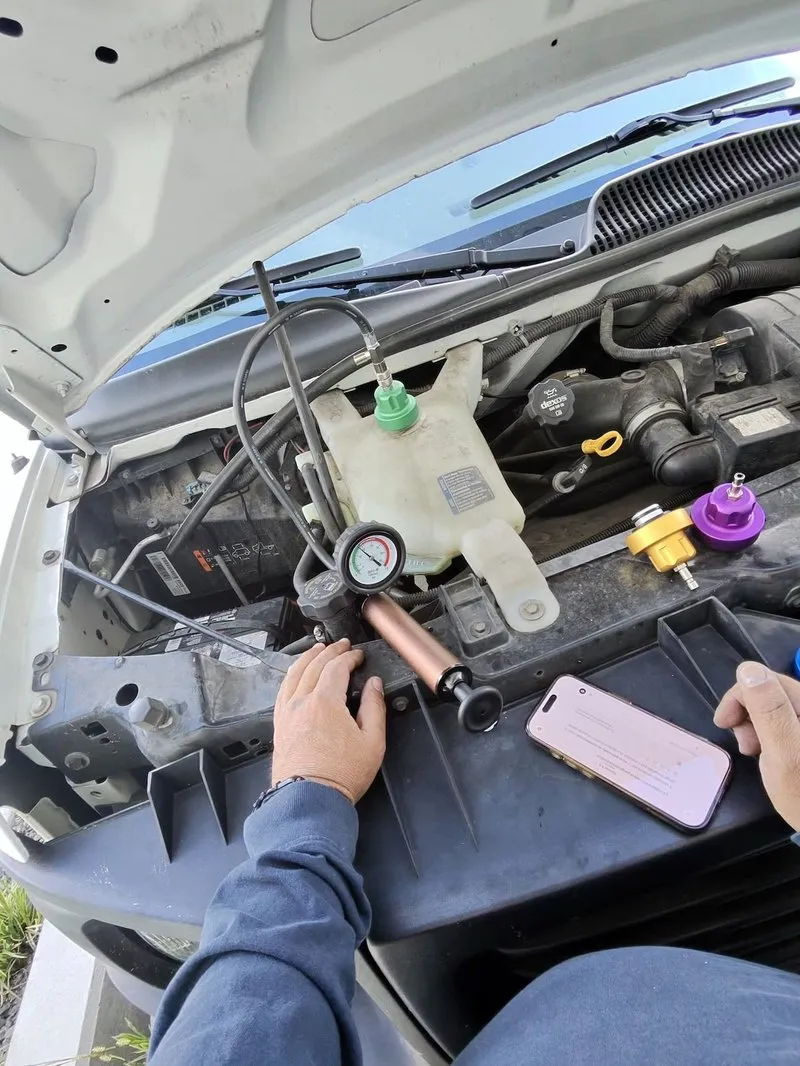
Before touching anything, we ran a pressure test on the cooling system right there in the driveway. The van never left the spot where the crew parked it. We hooked a pressure tester to the system and brought it up to the same pressure the engine hits when it's running hot.
The hoses and clamps held steady. The needle didn't move on those, so we crossed them off the list. Then the reading dropped, and it dropped only at the water pump, not slowly across the whole system. That kind of drop, sharp and isolated to one spot, means that one part is failing on its own, not the lines around it.
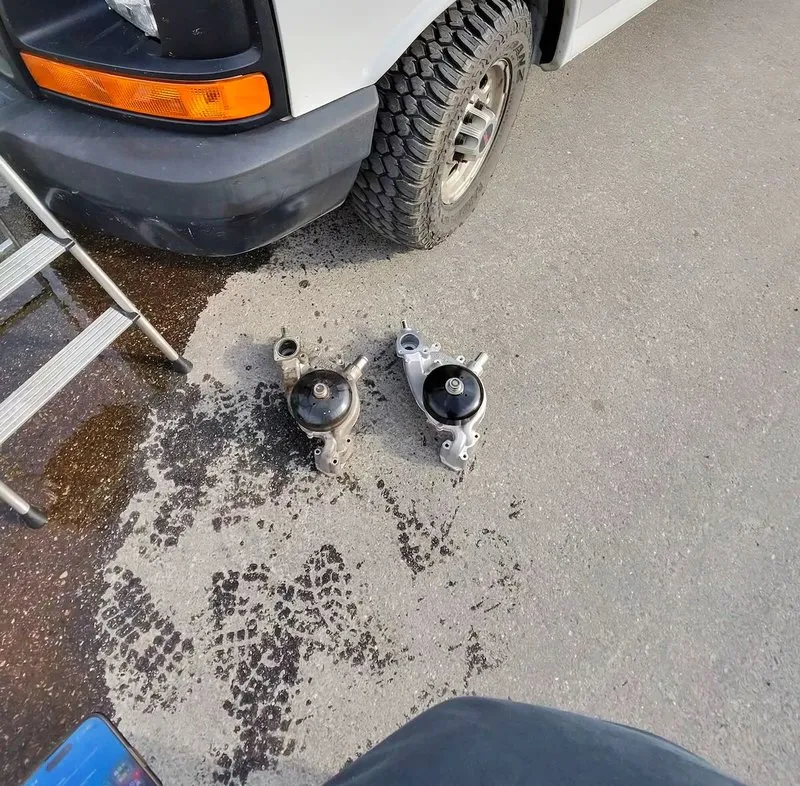
The pump's internal seal had let go. Fairly common on a van with this kind of mileage and use. We ruled out the fitting and the hose before we ever touched the pump, so by the time we named it as the cause, there wasn't much left to guess about.
We keep the gauge in view while this happens so the client sees the same reading we do. Nobody has to take our word for it.
What the test ruled in, and what it ruled out
The pressure test named one part: the water pump had failed internally, and that's where the coolant under the van was coming from. Nothing else on the system was leaking. The hoses and clamps held their seal under the same test, and so did the reservoir.
That mattered for the repair itself. A second leak somewhere else would have meant reopening the system after the pump was already replaced, on a van that was supposed to be back on the road that evening. Because the test isolated one cause, the whole repair fit into a single visit to the same driveway.
The pump we installed was a genuine GM part, not an aftermarket substitute, and it was available locally the same afternoon. That's not always the case on every vehicle. When it isn't, the timeline changes, and we tell the client that up front instead of promising a same-day fix we can't deliver.
Getting the crew back on the road the same day
With the cause confirmed, we sourced a genuine OEM water pump that same afternoon, locally, without a special order. The old pump came out, the new one went in.
Installing the part is only half the job. After a repair like this, the cooling system has air trapped in it that has to be bled out, or the engine can run hot even with a good pump. We refilled the system, bled the air out, and ran the engine to confirm the pressure held steady under load, not just at idle.
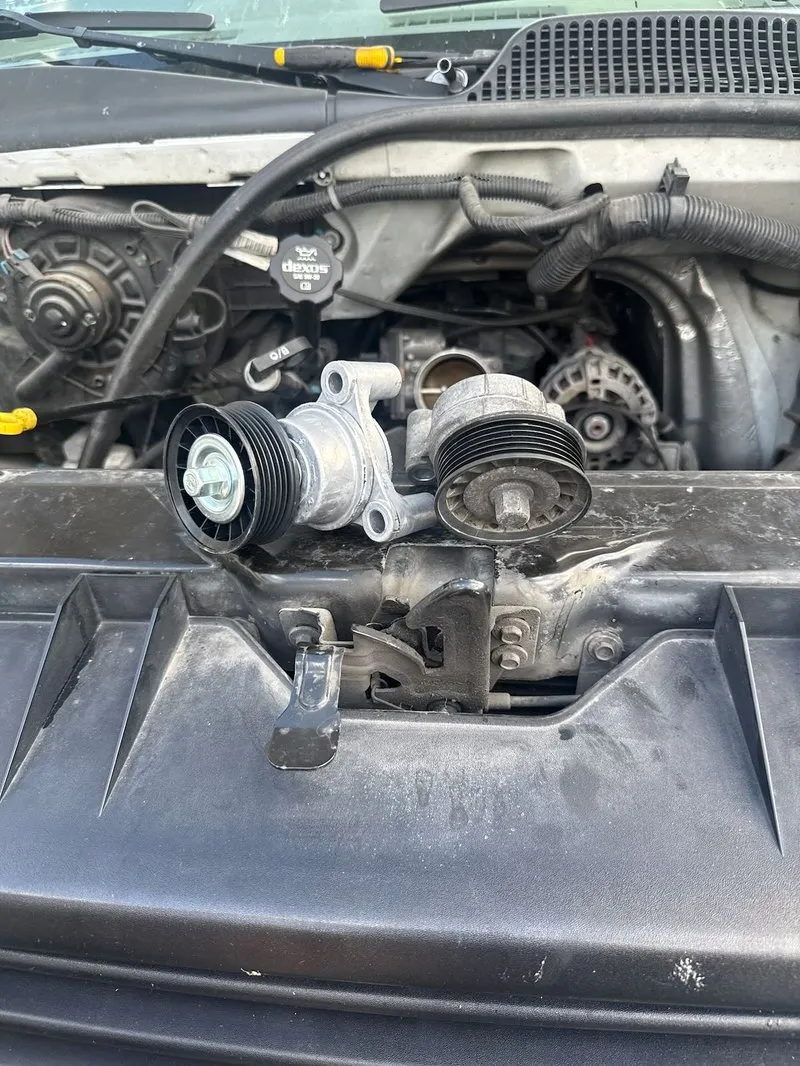
While the pump was already out, we found a second issue with the van and fixed that too, in the same visit. We showed the crew what we'd found and agreed the price by text before touching it, so it went onto the same bill they'd already seen. One trip covered both repairs, and the call-out was charged once.
The van was ready at about 7 PM, the same day the crew first texted us that morning. Other shops in town had quoted them two weeks just to look at it. The crew drove back toward Vancouver that night.
Why a work van can't sit in a shop queue
For a personal car, a two-week wait is an inconvenience. For a work crew, the van is the job. Fourteen days off the road is fourteen days nobody gets to the next site, and for a crew that cost is far bigger than the repair itself. This one went from first text to finished repair in a single day.
Working on-site changes where the vehicle waits. It stays in your driveway, or in your company's parking lot, and it stays yours the whole time. You are standing next to the mechanic when the gauge is read, when the failed part comes out, and when the price is set. Nothing about the diagnosis happens somewhere you can't see it.
That's the part clients tell us they value most, above the speed. It's a premium service precisely because it's built around your day rather than a shop's schedule, and because the same mechanic who answered your first message is the one standing at your vehicle.